


Teletech arrives in Italy: the community, the culture and the artists defining a new generation of raving
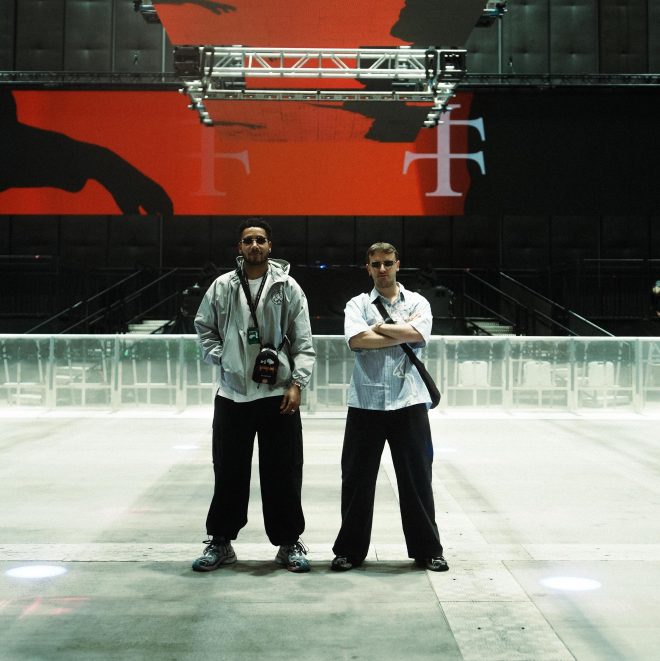
Few electronic music brands have expanded as rapidly in recent years as Teletech. What began as a series of student house parties in Manchester has evolved into one of the most influential forces in contemporary dance music, hosting events across clubs, warehouses, and festivals around the world. Founded with the intention of creating greater access to harder forms of techno in their hometown, the project has grown far beyond its original ambitions while maintaining a distinct identity. Today, Teletech represents not only a successful events brand but also a cultural movement that resonates with a new generation of ravers. Its arrival in Italy marks another significant milestone in a journey that continues to accelerate.
On June 13, Teletech will make its Italian debut at Adriatic Sound Festival. The event introduces one of Europe’s most talked-about electronic music brands to a country whose relationship with nightlife, dance culture and musical expression has always been unique. Italy has long cultivated scenes that value emotion and atmosphere as much as technical excellence behind the decks. For Teletech, the occasion represents more than a new territory on the map. It is an opportunity to connect its community-driven ethos with an audience already known for its passion and commitment to dance music.
According to founders Tom and Anton, the foundations that enabled Teletech to scale globally were established long before the brand operated internationally. They explain that even in the earliest stages, customer experience remained central to every decision they made. “Even at the smallest scale, we’ve always had the customer experience at the forefront of our minds. We’ve both always had a passion for music, but there was a definite gap in the market for the harder techno artists, so we were able to fill that space and make it our own. Now, whether it’s a small capacity club or a festival stage, we always adapt to each location to make it personal to them whilst retaining the high production values everyone has grown to recognize.” Their answer highlights a philosophy that has remained remarkably consistent despite the project’s rapid growth. Rather than replicating the same formula everywhere, Teletech has focused on adapting to different environments while preserving the spirit that first attracted audiences.
That philosophy extends directly into the community that has formed around the brand. While many promoters focus primarily on programming and production, Teletech has consciously prioritized creating environments where audiences feel involved rather than simply entertained.
Tom and Anton: “We wanted to create parties that people would feel they were a part of, so the sense of community naturally evolved from that intention. It’s important that the audience feels heard and that the space is welcoming, so it creates a sense of family that can really be felt at every event we do. It’s that sense of belonging that seems to have helped people connect with the brand as well as just the music.” In an era where nightlife brands increasingly compete for attention through spectacle, this emphasis on participation and belonging has become one of Teletech’s defining characteristics. The result is a following that identifies with the culture as much as the lineups themselves.
Bringing that culture into Italy presents an exciting challenge and opportunity. Over the past several years, Teletech has staged events across a wide range of countries, exposing the brand to different audiences and nightlife traditions. Yet the founders believe Italy offers something particularly special. “We’ve had events across so many different cultures now, spanning almost all the continents, so we’ve become accustomed to delivering our Teletech spirit and making it work with whichever location we’re in. This is our only Teletech show in Italy in 2026, so it’s great to showcase the range of artists and styles we represent. We love the energy of the Italian audience and their passion for dance music, so we can’t wait for this show.” Their enthusiasm reflects a broader appreciation for a scene that has consistently maintained a strong emotional connection to electronic music.
Looking ahead, Teletech’s ambitions increasingly extend beyond traditional promotion. Merchandise, digital platforms, branding initiatives, and a growing ecosystem around the project have all contributed to a sense that the brand now occupies a larger cultural space. When asked whether Teletech’s future lies primarily in events or in something broader, Tom and Anton once again emphasized the role of community. “The bigger we’ve grown, the more our sense of community has been felt. Obviously, we’re known for music events and as promoters, but you can already feel that it’s extended beyond that. People want to be a part of something, and they can get that with our community, so we’re excited to see what the next 5 years bring.” Their answer suggests that the project’s next phase may be defined less by geography and more by the continued strengthening of the surrounding culture.
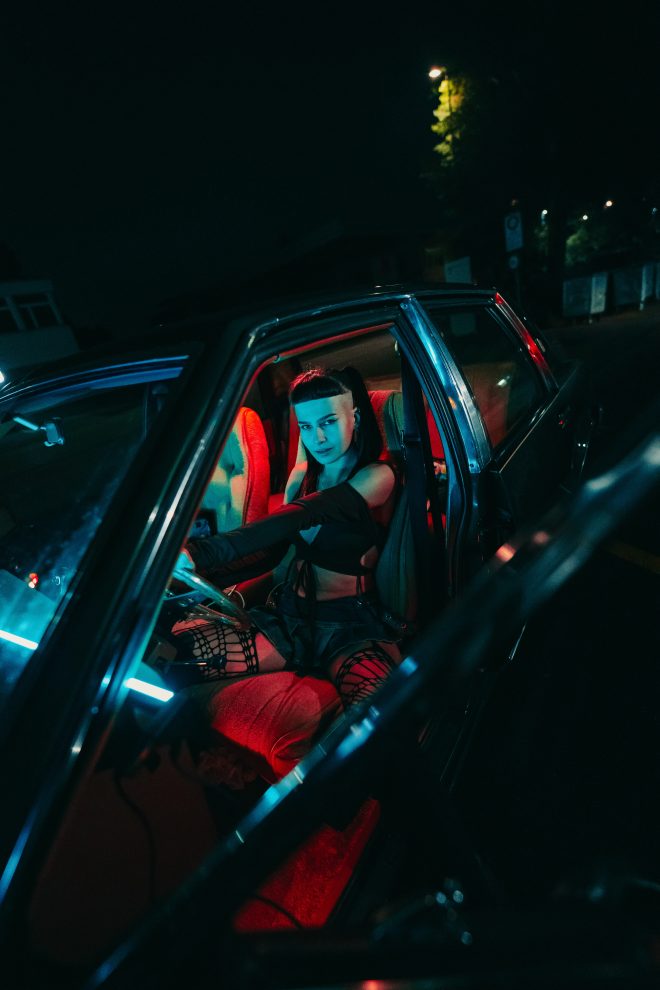
One of the artists helping bring that vision to Italy is Jazzy, whose rise has been defined by a combination of musical talent, self-awareness, and authenticity. When discussing confidence, she rejects the idea that self-belief is a permanent condition. Instead, she describes it as something that must be continually rebuilt throughout a career filled with uncertainty and external pressures. “I think confidence is often misunderstood. People imagine it’s a permanent state, but for me it’s something that has to be rebuilt over and over again. The music industry can be incredibly validating one day and incredibly humbling the next, so if your confidence depends entirely on external feedback, you’re constantly at the mercy of things you can’t control. Over the years, I’ve learned that trusting yourself isn’t about always feeling certain. It’s about continuing to move forward even when you’re uncertain.” Her perspective offers a refreshing contrast to the carefully curated certainty that often dominates social media and artist branding.
That same sense of intentionality shapes her relationship with manifestation and personal growth. Rather than treating manifestation as a purely spiritual concept, Jazzy views it as a practical framework that influences decision-making and behavior. She explains: “For me, it’s definitely a mix of all three. Spiritually, manifestation helps me stay connected to a bigger vision of where I AM going. Psychologically, it trains my mind to focus on possibilities instead of limitations. Practically, it keeps me taking actions that align with my goals and lifestyle. I don’t believe manifestation means sitting at home and waiting for things to happen. I think it’s about becoming the person who is capable of receiving the opportunities you’re asking for.” The answer reveals a mindset grounded not in wishful thinking but in sustained action and self-development.
Jazzy has also developed a strong visual identity that mirrors the individuality present in her music. In a landscape where artists often feel pressure to conform to trends or established archetypes, she remains committed to instinctive self-expression. “Self-expression is incredibly important to me because music and visuals are part of the same language. I don’t separate them. The way I dress, the imagery I create, the atmosphere around the project, it’s all part of communicating who I am. Every scene talks about individuality, but true individuality challenges expectations. It’s easier to celebrate uniqueness in theory than in practice. At the same time, I think audiences are craving authenticity more than ever.” Her comments speak to a broader shift within electronic music, where audiences increasingly value sincerity over carefully manufactured identities.
When discussing Italy specifically, Jazzy’s admiration for local audiences becomes immediately apparent. She describes Italian clubbers as deeply engaged participants rather than passive consumers of nightlife experiences. “Absolutely. One thing I always notice in Italy is how emotionally engaged people are. The crowd doesn’t just consume the experience; they participate in it. They bring the heat. There’s a passion that feels very natural. What makes Italian club culture special to me is that it feels deeply social it feels. People aren’t only there for the music, they’re there for the entire experience. The conversations, the energy, the style, the emotions, all of it becomes part of the night.” For an artist whose work is built around connection and expression, that atmosphere creates particularly meaningful performances.
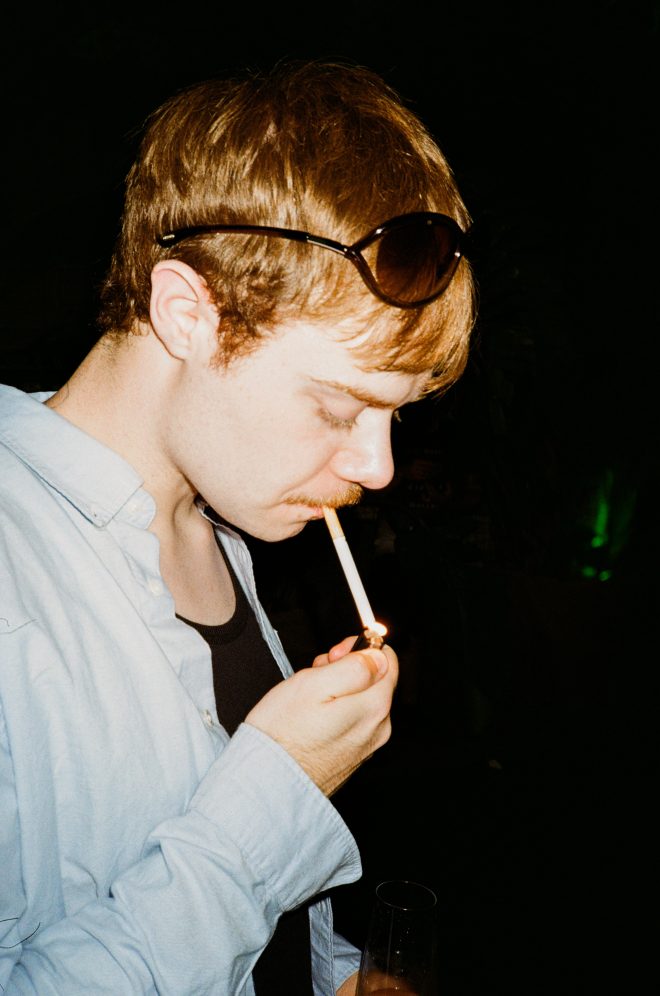
Faster Horses arrives with a similarly audience-focused approach, although his perspective is rooted in a very different musical philosophy. His sets move freely between house, garage and vocal-driven dance music, reflecting a belief that energy matters more than genre boundaries. Discussing his approach to DJing, he shares: “Honestly, my ethos when it comes to DJing has always just been to play whatever I want, and I think my DJing style has sort of evolved into learning how to blend things that traditionally might not usually work. I have a real focus on high energy music and I find that covering a few genres in one set is the best way to achieve this, because people never really know what’s coming next. Vocals are just the cherry on top. There’s so much good, vocal driven music out at the moment, and I love playing it.” The result is a style that prioritizes surprise, momentum and emotional impact.
His visual identity follows a similarly unconventional path. While much of contemporary electronic music continues to embrace darker aesthetics, Faster Horses deliberately moves in the opposite direction. He said: “I think this comes from cutting my teeth in the techno scene, and very quickly getting sick of that aesthetic. It’s all so dark, and evil, and I was like, why can’t techno be fun, and happy? I think that mindset just sort of carried over into the music I play now, and maybe guided my sound a little bit too. For me, dance music is about having fun. It’s about partying, letting loose, spending time with your friends, and life is so serious, I don’t understand why you would want to bring that into your free time too.” His comments serve as a reminder that joy and escapism remain central components of club culture.
Collaboration has also become an important part of Faster Horses’ artistic development. Reflecting on a recent back-to-back set with Stef De Haan, he highlights both the challenge and excitement of sharing creative control with another artist. “I love a B2B because it’s always such a toss-up, but the feeling of when you do click perfectly is like nothing else. I felt this with Stef straight away, that feeling of being totally confident that their song selection and mixing isn’t gonna pull away from the vibe that you’re trying to build up. B2Bs are such a challenge, and I’d say they can actually be quite stressful at times, but it’s truly the best feeling to share the booth with someone you really respect.” His answer captures the unpredictability that often makes collaborative performances so compelling for both artists and audiences.
Italy has also left a lasting impression on him despite his having made only a handful of appearances in the country. He describes local audiences as uniquely expressive and emotionally invested in the music itself. “I’ve not actually played in Italy so many times yet, actually only twice, but both shows were insane. The crowd feels so expressive, the people are so into the music. It feels like a pocket of Europe that hasn’t been touched by the whole TikTok Techno thing so much. I wish I played there more, to be honest. It’s really special.” That sentiment mirrors many of the observations made by both Jazzy and the Teletech founders. As the brand prepares for its Italian debut, the recurring theme throughout every conversation is clear: community, authenticity and genuine connection remain the qualities that matter most.
On June 13, those values will finally arrive in Italy under the Teletech banner. The event represents more than a debut show for a globally recognized promoter. It is the meeting point between a rapidly growing international community and one of Europe’s most passionate dance music cultures. If Teletech’s success has been built on making people feel part of something larger than a night out, then Italy may prove to be one of the most natural places for that philosophy to resonate. The foundations were laid in Manchester, but the story continues to evolve with every new audience that embraces it.
