


The Most Epic Festival Destinations In The World
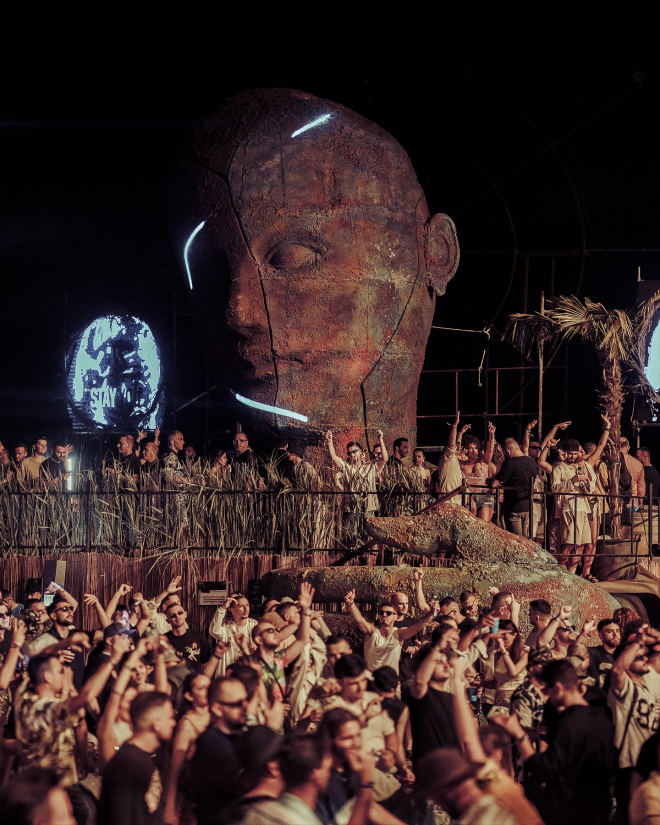
Electronic music has always carried a sense of place, even at its most transient. What has changed is how deliberately that relationship is being shaped. Across the current festival landscape, location is no longer incidental. It defines the pace of the day, the way sound travels, the way a crowd gathers and disperses.
From the Caribbean to the Mediterranean, from Atlantic coastlines to inland quarries and jungle clearings, each setting brings its own physical logic. Open horizons stretch time and soften transitions. Enclosed environments concentrate energy and sharpen focus. Historic sites introduce a different kind of weight, where music unfolds against structures that have stood for centuries. In newer or less formal spaces, the absence of that history creates room for experimentation, where format and flow are still being negotiated in real time.
What links these destinations is a shared awareness that the environment shapes experience. A sunrise set on a beach in Saint Martin carries a different tension than a night inside a Roman quarry in Istria. A festival moving across yachts in the Mediterranean builds momentum differently than one rooted in a fixed coastal site. In places like Essaouira or Koh Phangan, climate and atmosphere become part of the rhythm, guiding how the music is received as much as how it is played.
The result is a global circuit that feels increasingly defined by context. These festivals are not interchangeable stops on a calendar. Each one operates on its own terms, shaped by geography, culture and the physical limits of its setting.
Mediterranean & Southern Europe
This region carries weight. History is embedded in the ground, and festivals operate in direct conversation with it.
At Segesta, Aura Festival (1 – 2 May 2026) unfolds within ancient Greek ruins, where architecture predates the music by thousands of years. The contrast is constant, tracks moving through spaces designed for entirely different rituals.
In Palermo (1 June 2026), Aura continues its dialogue between electronic music and historic space with Richie Hawtin set to headline the 18th-century Palazzina Cinese, following a sold-out debut beside the ancient Doric temple at Segesta that reframed Sicily’s archaeological landmarks as living cultural environments rather than static monuments.
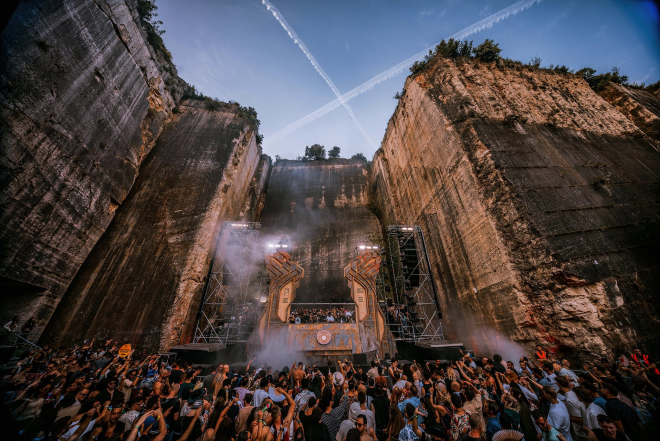
Further along the Adriatic, Gates of Agartha (4 – 7 June 2026) transforms a Roman quarry in Croatia into a contained acoustic chamber, where stone walls shape both sound and perception.
In Castellammare del Golfo, Unlocked Music Festival (25 July) leans into intimacy. Fortress walls, narrow streets and sea views compress the experience into something more focused, more immediate.
On the French Riviera, Les Plages Électroniques (7 – 9 August 2026) stretches the format outward again, scaling up across Cannes’ shoreline without losing the presence of the sea that anchors it.
Aura’s next move feels less like festival expansion and more like cultural positioning. After selling out beside the ancient Doric temple at Segesta, the Sicilian series now shifts into Palermo’s Palazzina Cinese with Richie Hawtin at the centre of a programme that continues to test the relationship between electronic music and heritage space. What could easily read as spectacle instead lands with unusual clarity, largely because the project frames these locations as active environments rather than decorative backdrops. The statement from Segesta’s Archaeological Park Director, Luigi Biondo, gives the initiative additional weight, placing trust in younger generations and contemporary culture as tools for preservation rather than disruption. Hawtin’s inclusion feels equally deliberate. Few artists carry the same historical relationship to techno’s evolution while still projecting futurism with credibility, making him a natural fit for a series built around continuity between past and present.
Coastal Europe & Festival Hubs
Here, the experience is less about history and more about infrastructure. These are places built to host, refined over years of iteration.
Tisno’s Garden Resort in Croatia has become one of the most consistent summer circuits in the world. Across the season, Terminal V, Hospitality On The Beach, Hideout Festival and Dimensions Festival rotate through the same coastal framework, each reshaping the atmosphere without changing the setting.
In Bulgaria, PhilGood Festival (17 – 19 July) takes a different approach, layering contemporary programming onto Plovdiv’s rowing canal, where the city itself becomes part of the composition.
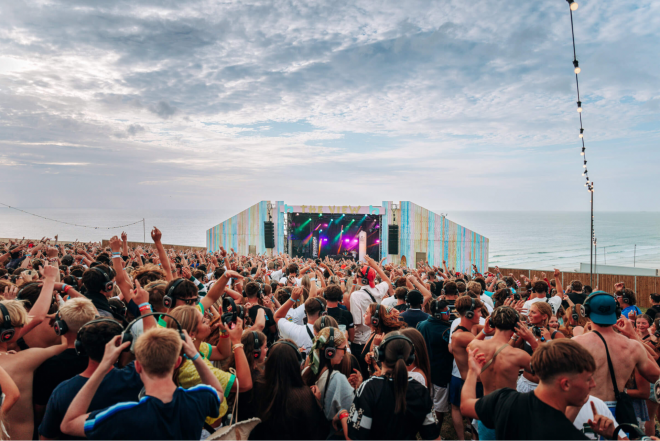
Further west, Cornwall’s Boardmasters Festival connects music back to something elemental. Surf, coastline and live programming intersect in a way that feels less constructed, more reactive to the environment.
Island & Tropical Escapes
Isolation changes everything. Time stretches, boundaries blur, and festivals take on a more fluid identity.
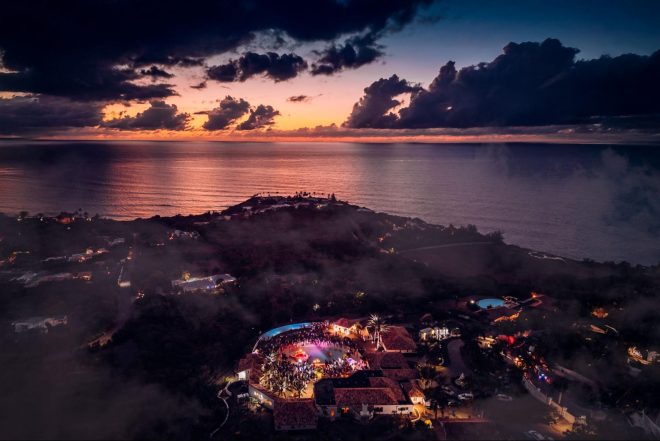
In the Caribbean, SXM Festival (March 2027) transforms Saint Martin into a continuous sequence of beach, jungle and villa experiences. The island itself dictates the rhythm, with sunrise sessions and elevated viewpoints redefining the dancefloor.
In Thailand, Half Moon Festival builds a different kind of isolation. Set within the jungle of Koh Phangan, it creates a contained world of light, sound and atmosphere, where the outside disappears entirely.
Emerging Coastal Frontiers
These are the spaces still defining themselves. Less saturated, more open, with a sense that the format is still evolving.
In Albania, UNUM Festival (4 – 8 June 2026) unfolds across beach and pine forest with five days of uninterrupted music. The absence of clear breaks flattens time, allowing the experience to evolve organically.
In Morocco, MOGA Festival uses Essaouira’s Atlantic coastline as its foundation. Wind, light and sea shape the pacing, creating a more restrained, atmospheric experience.
Experimental Landscapes & Art-Driven Spaces
Here, the focus shifts away from scale or location toward concept. These are environments designed as much as they are discovered.
In Portugal, YARD Festival (21 – 24 May 2026) merges electronic music with large-scale installations across Azeitão’s white sand mountains, where movement through the landscape becomes part of the experience.
In Brazil, Surreal Park operates as an evolving space rather than a fixed event, blending architecture, art and sound into a continuous, immersive environment.
Festivals in Motion
Some formats reject the idea of place entirely.
The Yacht Week operates across Croatia, Athens, Sicily and French Polynesia, replacing static venues with movement. Boats become stages, routes become programming, and the journey itself defines the experience.
