


Dentro il disco: i Void Fill ci raccontano l'uscita su Vesuvius Soul Records
Post-punk, improvvisazione e caos lucido: i Void Fill firmano la nuova release di Vesuvius Soul Records con tracce che trasformano la tensione politica in energia da dancefloor.
ENGLISH VERSION BELOW
Cosa accade quando una band fortemente radicata nel post-punk collide con il dancefloor? Ce lo siamo fatti raccontare da Jakob, Ken e Pete, nomi all’anagrafe del trio Void Fill che oggi, venerdì 12 dicembre, firma la sua prima release su Vesuvius Soul Records, label e record shop napoletano che negli anni è emerso come uno dei progetti più forti del panorama elettronico indipendente.
Il risultato è un suono che non chiede permesso, che scortica la superficie lucida dell’elettronica per lasciar emergere nervi, denti e improvvisazione pura. I Void Fill arrivano così: come un corto circuito tra istinto e precisione, tra anarchia creativa e una visione che prende forma mentre la registrano.
La loro nuova uscita per Vesuvius Soul Records tiene insieme tutto questo. Clickbait e Voice 2 Skull sono due traiettorie che affondano nel presente socio-politico, tra ironia acida, breakdown mentali e una tensione narrativa che respira dal punk, ma trova il suo corpo sulla pista. Vi sembra un po’ assurdo? Non temete, anche loro sono increduli che Onur Özer abbia suonato il loro disco nel pieno di un set.
Li abbiamo intervistati per capire cosa succede davvero nel loro laboratorio a distanza, tra Canada e Regno Unito, e come si costruisce un’estetica che vive di libertà totale, spirito DIY e un’ironia che non fa sconti a nessuno, nemmeno a loro stessi.
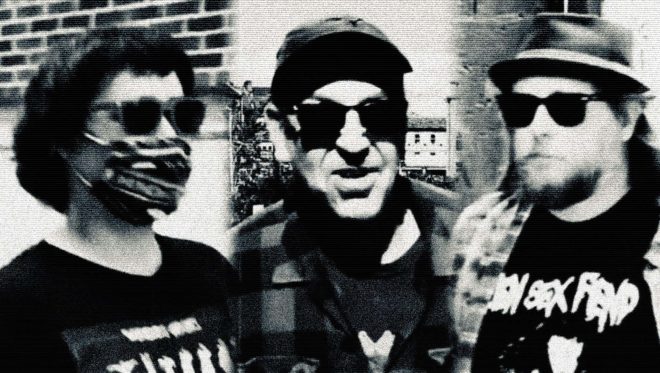
Per chi non vi conosce ancora: chi sono Void Fill oggi? Da dove venite, come nasce il progetto e quale visione vi guida quando entrate in studio?
Jakob: Void Fill siamo io, Jakob “King Pong” Rehlinger (produzione e basso), Ken Holiday (chitarra) e Pete F. Davies (voce e testi). Il progetto nasce come risultato di uno scherzo, o meglio di una sfida. Ken stava rimuginando online sul fatto che la gente chiamasse i vinili “vinyls”, quando “vinyl” è già il plurale corretto. Un nostro amico, che gestisce la Lance Rock Records, ha provocato me e Ken: “Perché non fate un progetto che si chiama The Vinyls e io vi pubblico un singolo?”. Credo fosse una battuta, ma io ho preso la cosa sul serio.
Una rapida ricerca su Google ha mostrato che esistevano già un milione di band indie chiamate The Vinyls, quindi ho pescato un nome da una lista che tengo sempre a portata di mano e che mi sembrava perfetto per l’umore dei brani post-punk dance su cui stavamo lavorando: Void Fill.
Dopo qualche mese in cui nessuno dei due riusciva a trovare una linea vocale che funzionasse, ho aggirato Ken e ho scritto a Pete, con cui avevo già collaborato pubblicando una cassetta del suo progetto Gad Whip sulla mia etichetta Arachnidiscs. Così è nata la prima uscita di Clickbait, una tiratura limitata di 12” one-sided su etichetta canadese Lance Rock. E quella è ancora l’idea che ci guida: cogliere le sfide al volo e farci una risata mentre lo facciamo.
Il vostro suono ha una cifra molto precisa: crudo, fisico, digitale ma profondamente umano. Quali sono le radici musicali che vi hanno formato e quali elementi, secondo voi, definiscono davvero l'estetica Void Fill?
Jakob: Per quanto mi riguarda, guardando solo la parte produttiva, i riferimenti più evidenti sono Public Image Ltd, Revolting Cocks e le produzioni di Adrian Sherwood negli anni ’80, soprattutto il suo lavoro con Mark Stewart. In realtà, tutti i progetti di Mark Stewart stanno sempre da qualche parte nella mia testa quando mi avvicino a un brano dei Void Fill. L’estetica Void Fill è sicuramente definita da un’attitudine anarchica, che nasce dal nostro modo di affrontare la musica in generale e dal processo specifico che abbiamo sviluppato insieme.
Pete: Etica DIY e tutto ciò che comporta. È difficile mettere in parole il motivo per cui fai qualcosa che porti avanti da più di quarant’anni.
Jakob: È vero. Onestamente, credo che nessuno di noi “pensi” davvero a ciò che sta facendo quando lavora a Void Fill. Non c’è un’intenzione precisa. Ci mettiamo a fare musica e quello che viene fuori è Void Fill.
La vostra musica sembra muoversi sempre su un bordo sottile tra caos controllato, saturazioni mentali e tensione narrativa. Che tipo di immaginario vi interessa esplorare? Da dove arrivano le vostre idee più estreme?
Pete: Sì, sono d’accordo. La musica, le idee, l’immaginario… tutto è intriso di una sensibilità punk, perché è da lì che veniamo. È uno spazio in cui tutto è possibile. Chi avrebbe mai detto che questo 12’’ sarebbe davvero uscito? Metti la testa su qualcosa e non sai mai dove può portarti. È questo il bello. Non sapere. Libertà assoluta.
Come è nata la collaborazione con Vesuvius Soul Records?
Jakob: Ci hanno contattati dal nulla, parecchio tempo fa ormai. Credo fossero agli inizi, forse non avevano nemmeno ancora pubblicato nulla in formato fisico. Onestamente, non ci aspettavamo che la cosa andasse davvero in porto. In passato avevamo ricevuto proposte che poi non si erano concretizzate, sia con Void Fill che con altri nostri progetti. Siamo tutti un po’ veterani della scena underground, fa parte del gioco. Dici di sì a tutto, non ti tiri indietro e vedi cosa succede. Quindi, naturalmente, siamo davvero contenti ed entusiasti che adesso stia accadendo per davvero.
Qual è la visione condivisa che vi a Vesuvius Soul Records unisce maggiormente?
Jakob: Già guardando il loro Instagram era chiaro che il loro focus musicale non fosse distante da ciò che stavamo facendo noi. Sembrano ragazzi ambiziosi, con molta passione, e sono curioso di vedere dove arriverà Vesuvius Soul da qui in avanti. Quando ci hanno chiesto di contribuire alla loro compilation digitale charity a favore di Gaza, credo che ci siamo sentiti ancora più in sintonia, sapendo di essere almeno in parte allineati anche sul piano politico. Non posso parlare a nome di Vesuvius Soul, ma penso sia corretto dire che i Void Fill sono antifascisti, anticapitalisti e certamente contro ogni forma di genocidio.
Parliamo di Voice 2 Skull / Clickbait. Cominciamo dall’immaginario: qual era la sensazione, il mondo mentale, la narrativa nascosta dietro questo EP?
Jakob: Sono curioso anch’io di sentire questa risposta.
Pete: Clickbait è stata la prima traccia dei Void Fill per cui ho scritto il testo. Era il 2018 e, beh, ero parecchio incazzato con internet… (ride). Qui nel Regno Unito avevamo appena attraversato il referendum sulla Brexit ed era un periodo folle, surreale ma anche spaventoso, perché oggi viviamo esattamente nel caos generato da quella scelta.
Voice 2 Skull, invece, ho dovuto riascoltarla per capirla meglio. Se Clickbait è più una scomposizione binaria, Voice 2 Skull riguarda una scomposizione mentale. La voce narrante cambia e le reazioni alle situazioni diventano un po’ instabili. Noi, comunque, siamo piuttosto felici nel nostro angolo di mondo, grati di nutrire le nostre metaforiche anatre.
L’immaginario che accompagna la release è diretto, senza giri di parole. C’è un’angoscia che nasce da precise agende politiche, da periodi storici in cui non è semplice vivere, anche se vivere tocca comunque a te.
Jakob: Ecco. Siamo interessati alla condizione umana dentro il paesaggio sociopolitico contemporaneo.
Pete: Voice 2 Skull parla anche dell’importanza di essere furbi e di indossare biancheria pulita.
Raccontateci come avete costruito le due tracce.
Jakob: Il processo è sempre lo stesso ogni volta che iniziamo una nuova traccia. Registro un beat e una linea di basso, che mando a Ken. Lui aggiunge la chitarra e me la rimanda. A quel punto faccio un po’ di editing, dando una forma più definita a partire da ciò che ha suonato lui. Poi invio questo primo mix a Pete, che ci piazza sopra un mucchio di linee vocali completamente fuori di testa, ribaltando tutto ciò che avevamo fatto fin lì. In senso positivo, ovviamente.
Da lì tocca a me prendere questo caos meraviglioso e provare a dargli un senso. Estraggo qualcosa dai deliri vocali di Pete che possa diventare un ritornello, capisco quali riff di Ken funzionano come hook e assemblo tutto in una struttura compiuta, aggiungendo percussioni, synth, melodica e il resto. Facciamo tutto a distanza, ognuno nel proprio home studio. Io e Ken viviamo in città diverse del Canada, Pete vive nel Regno Unito.
Il remix di LVCA ha una direzione tagliente, un approccio malinconico a un sound che richiama l’ultima parte degli ‘80. Come è nata questa collaborazione con lui?
Jakob: Il remix è stato organizzato da Vesuvius Soul. Non sapevo cosa aspettarmi quando mi hanno chiesto gli stems da mandare a LVCA, ma sono rimasto entusiasta del risultato, con quel tocco di synthpop ed EBM anni ’80 che sfocia quasi nell’electroclash. Splendido lavoro. Nei primi anni Duemila ero molto dentro all’electroclash, quindi è fantastico sentire quel suono riaffiorare. Tempismo perfetto, tra l’altro, visto che Edsel ha appena pubblicato il nuovo cofanetto When The 2000s Clashed, una compilation che celebra proprio quell’epoca.
Nelle due tracce si sente un equilibrio fortissimo tra impulsività e precisione. È un approccio intenzionale o il risultato del vostro modo spontaneo di produrre?
Jakob: L’impulsività nasce sicuramente dalla natura improvvisata con cui registriamo le tracce di base. Ognuno di noi affronta le prime performance in modo piuttosto libero, seguendo le vibrazioni del momento senza avere alcuna idea di quale sarà la destinazione. La precisione arriva invece dal mio lato perfezionista, che prende il sopravvento durante il mix per creare qualcosa che suoni intenzionale e curato nei dettagli. Per fortuna, vista la natura grezza e in qualche modo punk del materiale di partenza, non rischiamo mai di ottenere un suono troppo levigato o sovraprodotto.
Qual è stata la sfida tecnica più grande in questo disco? C’è qualcosa in particolare che avete imparato o affinato rispetto ai lavori precedenti?
Jakob: Come dicevo prima, Clickbait risale al 2018, anche se per questa release ho ripulito il mix. Riascoltando le tracce mi sono trovato a pensare più volte: “Ah, quindi l’avevo impostata così, eh?”. Credo che kick e hi-hat siano presenti per tutta la durata della traccia, non è proprio qualcosa che farei oggi, e in realtà non era nemmeno qualcosa che facevo abitualmente allora, ma è il risultato del fatto che il brano è nato come uno scherzo improvvisato, un modo per raccogliere una sfida. All’inizio non mi preoccupavo troppo della fedeltà sonora delle produzioni Void Fill. Quando siamo arrivati a Voice 2 Skull, per il nostro terzo EP, ogni elemento ha iniziato ad avere una sua traccia dedicata, così da darmi molte più opzioni in fase di mix ed editing.
Come immaginate queste tracce sul dancefloor? In che momento della notte pensate vivano al meglio?
Jakob: Sto ancora cercando di realizzare il fatto che Clickbait sia stata suonata da Onur Özer e che sia finita nei set dei club underground. Sono passati così tanti anni dall’ultima volta che ho messo piede in un club che faccio fatica persino a immaginarlo, ma credo che i Void Fill funzionino bene per quella zona solida e compatta di metà set, una sorta di vibrazione che tiene insieme tutto.
ENGLISH VERSION
What happens when a band deeply rooted in post-punk collides with the dancefloor?
We asked Jakob, Ken and Pete themselves, the three minds behind Void Fill, who today, Friday 12 December, sign their first release on Vesuvius Soul Records, the Naples-based label and record shop that has become one of the most compelling forces in the independent electronic landscape.
The result is a sound that doesn’t ask for permission, one that strips the glossy surface of electronic music to reveal nerves, teeth and pure improvisation. That’s how Void Fill arrive: as a short circuit between instinct and precision, between creative anarchy and a vision that takes shape only as they record it.
Their new release on Vesuvius Soul Records holds all of this together. Clickbait and Voice 2 Skull are two trajectories that dive straight into the current socio-political moment, oscillating between acidic irony, mental breakdowns and a narrative tension that breathes through punk but finds its body on the dancefloor. Does it sound a bit surreal? Don’t worry, they themselves are still bewildered that Onur Özer played their record in the middle of a set.
We interviewed them to understand what really happens inside their remote laboratory, between Canada and the UK, and how you build an aesthetic fueled by total freedom, DIY spirit and an irony that spares no one, not even themselves.
For those who don’t know you yet: who are Void Fill today? Where do you come from, how did the project begin, and what vision guides you when you step into the studio?
Jakob: Void Fill are myself Jakob “King Pong” Rehlinger (production and bass), Ken Holiday (guitar), and Pete F. Davies (vocals and lyrics). The band began as the result of a joke, or a dare. Ken was complaining online about people calling LPs “vinyls” when “vinyl” is the correct plural form. A friend of ours who runs Lance Rock Records challenged Ken and I to start a project called The Vinyls and he’d put out a single. I think it was a joke on his part, but I was determined to call his bluff. A quick Google search showed a million indie bands were already called The Vinyls so I grabbed something from my list of band names that I thought fit the mood of the post-punk dance tracks Ken and I were working on: Void Fill. After a few months where neither of us were able to come up with vocals that fit the song. I went behind Ken’s back and contacted Pete whose band Gad Whip I’d released a cassette by on my own label, Arachnidiscs. So that was the original release of “Clickbait”, a small run of one-sided 12” white labels on the Canadian label Lance Rock. And that is the original vision that still guides Void Fill, calling bluffs and having a laugh.
Your sound has a very distinct identity: raw, physical, digital yet deeply human. What musical roots shaped you, and which elements do you feel truly define the Void Fill aesthetic?
Jakob: For myself, purely from a production standpoint, the most obvious musical touchstones are Public Image Ltd, Revolting Cocks, and Adrian Sherwood’s ‘80s productions, especially his work with Mark Stewart. Heck, all of Mark Stewart’s projects are in the back of my mind for how I approach Void Fill tracks. The Void Fill aesthetic is certainly defined by an anarchic attitude that comes from how we approach music in general, and the nature of our specific process.
Pete: DIY ethics and all that, difficult putting down in words why you do something you've done for the last 40 odd years!Jakob: True, honestly, I don’t think any of us “think” about what we’re doing when we’re doing Void Fill. There’s no intention, per se. We set out to make some music and what ends up happening is Void Fill.
Your music always seems to move on a thin line between controlled chaos, mental saturation and narrative tension. What kind of imagery are you drawn to exploring? Where do your most extreme ideas come from?
Pete: Yes I agree, the music and ideas and imagery are full of punk sensibilities, that's where we come from. Where everything is possible, who knew this 12” would ever come out, you put your mind to something and you never know where that will take you. That’s the beauty of this, not knowing, absolute freedom.
How did your collaboration with Vesuvius Soul Records start?
Jakob: They contacted us out of the blue, quite a long while ago now. They were just starting out I think, maybe hadn’t even released anything physical yet. We honestly didn’t expect anything to come of it. We’d had offers that had fallen through before, both with Void Fill and our other projects. We’re each somewhat veterans of the underground music scene, it’s just the nature of the business. Say yes to everything, call the bluffs, see what shakes out. So naturally we’re very pleased and very excited it’s finally happening!
What is the shared vision that connects you most strongly with Vesuvius Soul Records?
Jakob: It was clear from looking at their Instagram that their musical focus wasn’t outside of what we were doing. They seem like ambitious lads with lots of heart and I’m excited to see where Vesuvius Soul goes from here. When they asked us to contribute to their digital charity compilation in aid of Gaza, I think we felt more comfortable knowing we’re at least somewhat politically aligned. I can’t speak for Vesuvius Soul, but I think it’s fair to say Void Fill are anti-fascist, anti-capitalist, and certainly anti-genocide.
Let’s talk about Voice 2 Skull and Clickbait. Starting from the imagery: what was the feeling, the mental world, the hidden narrative behind this EP?
Jakob: I’m curious about this too.
Pete: “Clickbait” was the first Void Fill song that I wrote the words to. This was in 2018 and and I was quite pissed off with the internet…. (laughing). Here in the UK we’d been through the Brexit referendum and it was a shit-crazy time and also quite scary, because we are now living in the resulting chaos of that vote.
“Voice 2 Skull” I had to listen back to understand it a bit better. Whereas “Clickbait” is more of a binary breakdown, “Voice 2 Skull” is concerned with a mental breakdown. The narrating voice changes and the reactions to the actual situations become a little unhinged. We are quite happy feeding the ducks, thank you very much.
The imagery of the release is to the point, there is a certain angst present because of political agendas, certain times you may find it difficult to live in, but live you must.
Jakob: There you go. We’re concerned with the human condition in the current socio-political landscape.
Pete: “Voice 2 Skul” is also about being smart and wearing clean underwear.
Walk us through how you built the two tracks. From the first spark to the final structure.
Jakob: The process goes like this every time we start a new track. I record a beat and a bass line which I send to Ken, who adds guitar and sends it back to me. Then I edit that a little bit, creating a bit more structure based on what he’s done. Then I send that rough guide mix to Pete who throws a bunch of bonkers vocals on it which upends everything we’ve done. In a good way, of course. Then I take this new hot mess and try to make sense of things. Pick out something from Pete’s rants that could be a chorus, figure out which of Ken’s riffs make a good hook and I collage it all together into a song structure, adding some more percussion, synths, melodica, etc. Everything is done remotely in home studios. Ken and I live in different Canadian cities, Pete lives in the UK.
LVCA’s remix has a sharp direction, a melancholic approach to a sound that recalls the late ‘80s. How did this collaboration with him come about?
Jakob: The remix was set up by Vesuvius Soul. I didn’t know what to expect when Vesuvius asked for stems to send LVCA, but I’m delighted with the sort of ‘80s synthpop and EBM influenced electroclash feel of it. Brilliant stuff. I was really into electroclash in the early 2000s and it’s great to hear that sound coming back. Good timing as well with Edsel’s new box set compilation When The 2000s Clashed celebrating the era having just been released.
In both tracks you can feel a strong balance between impulsiveness and precision. Is that an intentional approach, or simply the result of your spontaneous way of producing?
Jakob: The impulsiveness is definitely a result of the improvisational nature of how we lay down the bed tracks. I think we each take a pretty “free” approach to the initial performances, just going off vibes without any idea of what the destination is. The precision definitely comes from my perfectionist side taking over during the mixing process to create something that sounds intentional and meticulous. Luckily, given the raw, sort of punk nature of the source material, it’s never going to sound too slick or over-produced.
What was the biggest technical challenge in this record? Is there something in particular that you refined or learned compared to your previous works?
Jakob: As I mentioned before, “Clickbait” dates back to 2018, but I did clean up the mix for this release and going back to the tracks I definitely said to myself a few times “I set it up like that, huh?” I believe the kick and hi-hats are on one track. It’s not something I’d do now, and not something I’d normally do back then even, but that was a result of the track beginning life as an off-the-cuff joke to call a bluff. I wasn’t originally too fussed about the fidelity of Void Fill productions. By the time we did “Voice 2 Skull” for our third EP, everything got its own dedicated track to give myself more options in the mixing and editing process.
How do you imagine these tracks on the dancefloor? At which moment of the night do you think they hit their peak?
Jakob: I’m still wrapping my head around the fact “Clickbait” was picked up by the DJ Onur Özer and that it was being played in underground clubs. It’s been so many years since I’ve set foot in a club I can’t even fathom it, but I suspect Void Fill are a sort of solid middle of the set vibe.
