


Italiani Fuori #1: Matteo Manzini
DJ, selezionatore e curatore, Matteo Manzini vive a Londra da oltre quindici anni. In questa intervista ci ha raccontato il suo punto di vista su club culture, migrazione culturale e sulla costruzione di ecosistemi capaci di sostenere musica, identità e comunità. © Cover photo: Gabriela Andreica
ENGLISH VERSION BELOW
Dalle trasferte in solitaria Emilia Romagna - Londra è passato un bel po'. Matteo ha assaporato la club culture degli anni '90 e ne è rimasto folgorato, portando ancora oggi con sé nei suoi set quello spirito bambino di scoperta, che distingue un artista sensibile. Scegliere Londra quasi quindici anni fa è stato il naturale processo del suo percorso, come DJ e come ascoltatore appassionato, rendendolo oggi un selezionatore attento all'energia di chi ha di fronte e ispirato dal misticismo del "flow".
Il concetto di curatore è forse tra quelli che si sposano meglio con la personalità di Matteo al di fuori del booth. Negli anni, oltre il suo progetto damaged nato con Georgio Oniani, la sua presenza è stata di grande impatto per diverse realtà londinesi, fino a diventare membro della famiglia fabric, dove dal 2023 cura le chill-out room per gli eventi di 24 o 36 ore.
Abbiamo fatto una chiacchierata con lui su quello che rappresenta oggi essere un italiano che ha scelto altri orizzonti per aprirsi alla possibilità di vivere di musica e di club culture, facendoci raccontare cosa fa la differenza in una città come Londra, cosa ti insegna e cosa ti fa sentire a casa.
Oltre a rispondere alle nostre domande, Matteo ci ha raccontato di lui nel modo che probabilmente lo rappresenta di più: suonando. Un mixato esclusivo per Mixmag AE Group disponibile sul nostro canale SoundCloud per guardare oltre i confini di una personalità artistica raffinata e sorprendente. Cuffie su e buon ascolto!
Partiamo dalle basi: cosa ti ha spinto a lasciare l’Italia e quanto questa scelta è stata influenzata dalla musica?
Scelta influenzata al 110% dalla musica e dal clubbing, supportata nel 2009 da un gruppo di amici londinesi che frequentavo già da anni e con i quali andavo anche in vacanza a Ibiza e Berlino. A dire il vero, a un certo punto, mi hanno praticamente obbligato a trasferirmi e non ho opposto resistenza :)
Come sei arrivato a Londra? Cosa ti ha fatto restare?
Londra c'è sempre stata, da quando i miei genitori mi mandavano a studiare inglese in Gran Bretagna ai campi estivi dopo le scuole medie, per due settimane all’anno. Non finirò mai di ringraziarli per l’apertura mentale di una scelta del genere, a fine anni ‘80 non era scontata.
Da lì l'avvicinamento è stato progressivo, inizialmente come tappa dei viaggi Interrail negli anni ‘90, poi, dal 2003, approfittando dei primi voli low-cost con easyJet e Ryanair che ci permettevano di uscire di casa il sabato mattina per andare al fabric o al secretsundaze e ripresentarsi in ufficio il lunedì/martedì senza che i colleghi intuissero nulla, investendo lo stesso budget di un weekend a Riccione o Milano. Che “mi” permettevano, anzi, perché viaggiavo principalmente solo, in quanto ci volevano comunque energia, determinazione e un po’ di follia: potevo considerarmi un (mini) esploratore, il feeling era fantastico.
Sei anni di trasferte periodiche e incrementali, fino a quando non mi sono scordato di comprare il volo di rientro per Bologna :)
Londra è una di quelle città che sa dare tanto ma, credo, solo a chi ha dimostrato di meritarlo. Ti ci ritrovi in questo pensiero?
Londra concede una possibilità a tutti, ma è allo stesso tempo molto difficile da maneggiare: ognuno di noi viene qui con un sogno, e lavora intensamente per raggiungerlo, alcuni ci riescono, altri meno, magari si reinventano lungo il percorso e intuiscono potenzialità differenti. Non so se ci sia sempre “merito”, di certo gli atteggiamenti passivi vengono raramente premiati.
Qui ho capito che importa “fare” qualcosa, che l’errore è concesso perché ti permette di ricevere feedback, con i quali costruire qualcosa di ancora meno sbagliato. Il giudizio esterno si trasforma effettivamente in una consulenza gratuita, da filtrare ovviamente con il proprio buonsenso, e con il giusto approccio mentale diventa occasione di miglioramento, invece che di attrito o addirittura vergogna.
In che modo il contesto londinese ha influenzato il tuo rapporto con la musica, prima ancora che il tuo suono?
Qualunque act, di qualunque genere e dimensione, passa da Londra: l’offerta è infinita, e l’artista dei sogni, quello attuale e quello che ancora non sai lo sarà, probabilmente si esibirà nei prossimi sei mesi in una location, anche minuscola, distante non più di 30 minuti da casa tua.
Patti Smith in concerto sold out a Saint Paul Cathedral, ma anche Nicolas Lutz extended dj set per 50 persone a StarLane: ero lì, presente a entrambi, e pensavo “pazzesco, ecco perché viviamo in questa città”.
Ho imparato che l’input musicale che mi influenzerà per un giorno/mese/anno è a portata di mano e lo incontrerò il prossimo weekend, o al massimo il weekend successivo.
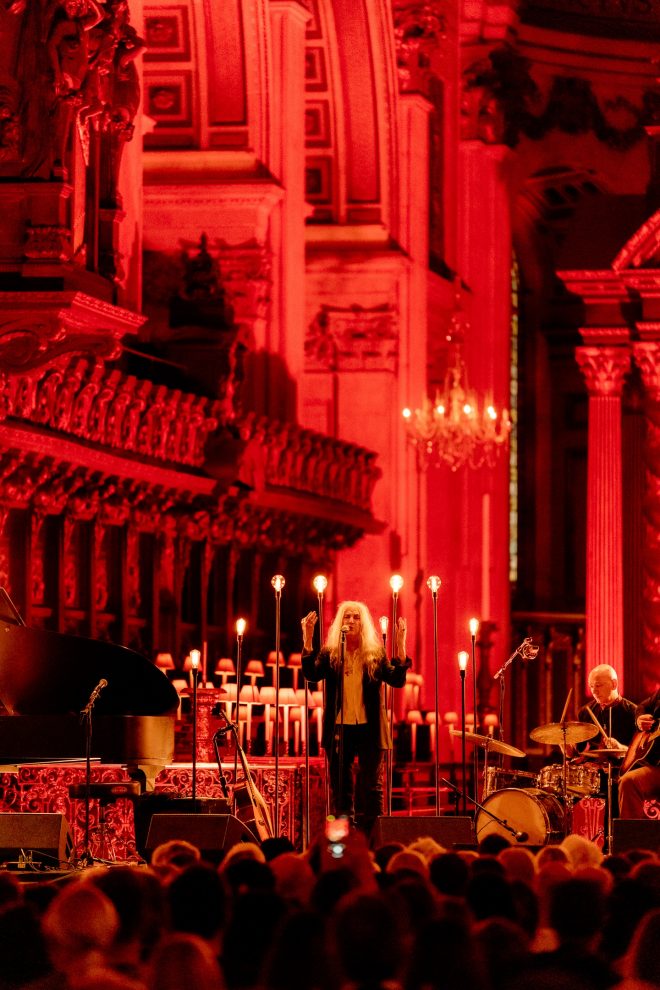
Foto: fabric x Saint Paul Cathedral - Patti Smith. © Benedict Priddy
Londra, tra fine ‘90 e inizi 2000, era il vero regno dei free party e dei rave. Ti ci sei approcciato a questo mondo? Se sì, cosa ti hanno lasciato quel movimento e quelle esperienze?
A essere sinceri, quello che so in materia di free party e rave l’ho imparato inizialmente a Bologna, che negli anni ‘90 era all’avanguardia: il primo Link di via Fioravanti innanzitutto, con una programmazione musicale che non ero ancora in grado di capire, ma che ha sicuramente contribuito a far nascere tutto ciò di cui stiamo parlando in questa intervista. Teatro Polivalente Occupato e Livello 57 anche, sempre a Bologna: non ricordo un DJ e forse nemmeno un genere in particolare, l’entrata era appunto gratuita o comunque a prezzi accessibili, andavamo e le nostre orecchie assorbivano tutto. Sono stati un ottimo punto di partenza e ne sono grato.
Alcune volte si rimaneva al Link tutta la notte, altre volte arrivavano informazioni relative a un qualche rave e si tentava di raggiungerlo, magari dopo aver chiamato un numero fisso da una cabina telefonica, senza certezze sulla quantità di persone presenti e sul fatto che fosse ancora in corso. Tempi meno agevoli rispetto all’iperconnessione attuale, ma che probabilmente mi hanno inculcato la tendenza a sperimentare, a fare lo sforzo di andare a vedere eventi su cui non si hanno informazioni esatte, unicamente per il feeling che possa valerne la pena.
Cosa credi possa offrire Londra agli artisti che l’Italia, ancora oggi, fatica a concedere? E invece, senti mancare qualcosa lì?
Tra i vantaggi offerti qui ci sono certamente flessibilità mentale e un livello minore di burocrazia, quindi più eventi che si traducono in maggiori opportunità di esibizione per gli artisti.
In direzione opposta, la sensibilità e il gusto italiani sono sempre un must, anche in termini musicali, immediatamente riconoscibili e non facilmente eguagliabili :)
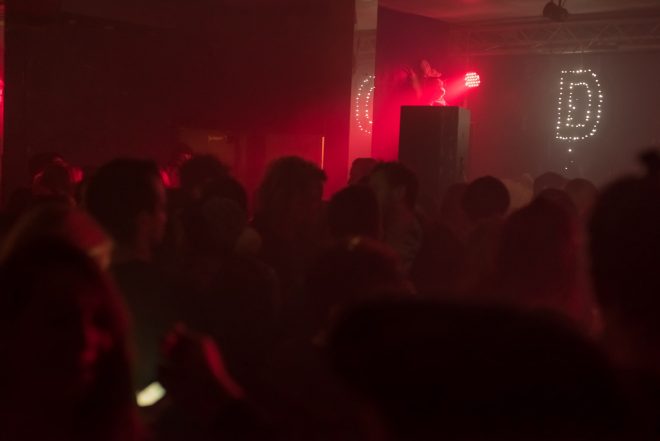
Foto: damaged party. © Nick Ensing
Ritornando a Londra: il fabric per te è una vera e propria famiglia. Come sei entrato a farne parte?
Andando al club come cliente: quando ti diverti e sei te stesso finisci per attrarre frequenze simili alle tue, di questo ne sono convinto. I primi ricordi delle maratone sul dancefloor di Room 1 sono indelebili, avevo battezzato il mio spot abituale, mi sono sentito subito a casa. Organizzavo un mio party, damaged insieme a Georgio Oniani, già dal primo mese in cui mi sono trasferito, e all’improvviso, credo fosse il 2011, parte dello staff del fabric, in particolare Judy Griffith, ha iniziato a frequentarlo: immagina le nostre facce sorprese, soprattutto la prima volta :) Eravamo a capienza abbastanza limitata e nascosti per scelta, facevamo 80-100 persone max a quel punto, ma lei ci ha trovati lo stesso.
Un po’ alla volta mi sono stati progressivamente affidati compiti/ruoli: organizzare after party per il fabric, poi dj set per WYS! e portare damaged in Room 3, fino al primo DJ set in Room 1 il sabato. Otto anni dal giorno in cui mi ero trasferito a Londra, che a me sono sembrati otto minuti.
E, a proposito di famiglia, cosa ritieni possa fare la differenza in un club che non si limita a essere tale, ma dà origine a una vera e propria comunità?
Riconoscimento del fatto che il dancefloor abbia la medesima importanza della consolle, 50/50, e che coloro che scelgono un certo club come clienti contribuiscono al suo successo allo stesso modo dei DJ, di nuovo 50/50.
“Thank you for being there and thank you for dancing”, vorrei sentire questa frase a ogni party.
Come dicevamo, dal 2023 il tuo ruolo nel team fabric è diventato anche quello di curatore della chill-out room del fabric, che sicuramente significa lavorare su una dimensione meno ovvia del clubbing. Da dove è nata questa idea e che tipo di responsabilità emotiva senti nel creare uno spazio di decompressione, ascolto e intimità?
Il lockdown causa covid è stato certamente lo spartiacque, un tempo infinito e liquido in cui poter esplorare tante direzioni musicali, e magari passare un pomeriggio intero ad ascoltare tre suoni e farne microtuning fino a trovare l’equilibrio migliore possibile tra loro. In quei mesi il mio main focus si è spostato sulla musica ambient, e ne sono nate diverse produzioni e i primi guest mix di questo tipo. Quando il fabric nel 2023 mi ha proposto di occuparmi della loro chill-out room durante gli eventi di 24/36 ore, spazio che esisteva già, ma che non aveva un curator dedicato, ho accettato senza dubbi, in quanto mi sentivo onestamente abbastanza pronto.
La responsabilità non è banale, con il senno di poi non l'avevo intuita tutta e subito, perché si tratta di essere musicalmente a fianco dei frequentatori del club nei loro momenti di maggior debolezza, mentale e fisica. Allo stesso tempo non voglio proporre una ambient mainstream e immediatamente digeribile, quella con gli uccellini e il rumore delle cascate per dire, magari utilizzata, senza offesa, in una spa o al ristorante: ricerca costante quindi, ma con equilibrio e leggerezza.
Dal punto di vista tecnico mi reputo molto fortunato, perché la Room 2 è perfetta, con sound system e luci impeccabili, oltre a essere acusticamente isolata dal resto del club: tanti party ora stanno tentando di aggiungere uno spazio chill-out, ma si tratta spesso di zone in cui arrivano le basse frequenze della main room, il kick in particolare, il che fa crollare tutto il concetto di relax/distaccamento.
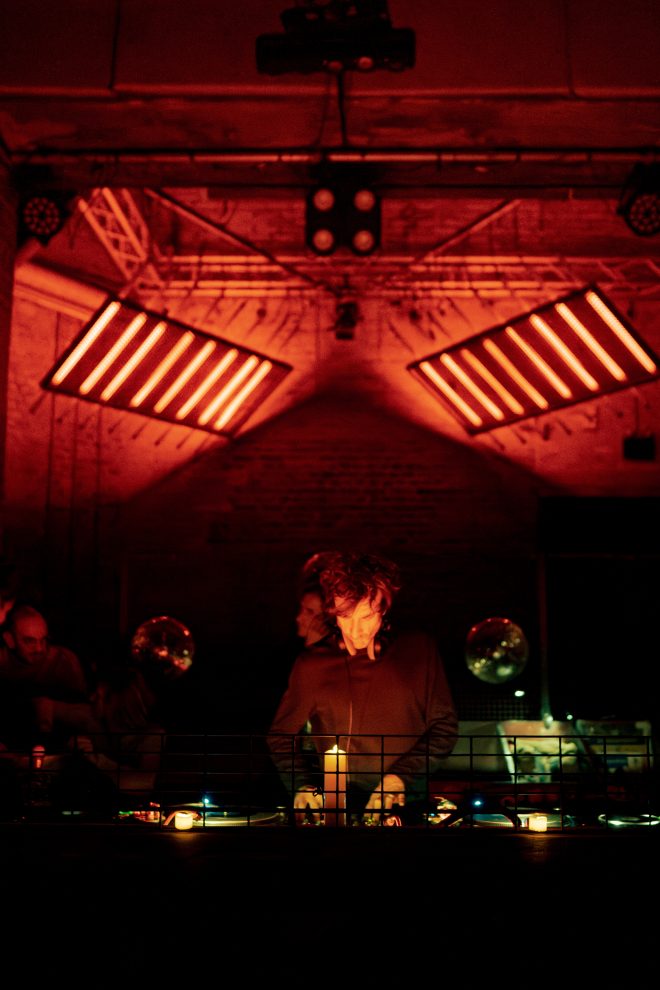
Foto: Matteo Manzini in chill-out room, fabric. © Claudia Rojas
Credi che in Italia si sarebbe potuto sviluppare uno stesso tipo di concetto “chill-out room”, o la club culture italiana è orientata verso altri orizzonti?
Probabilmente no, perché non c'è abbastanza pazienza, ma sarei felice di sbagliare la mia valutazione in merito.
Ci sono stati altri luoghi in cui hai pensato di fermarti prima di stabilirti definitivamente a Londra? Se sì, cosa ti hanno lasciato?
Milano a inizio anni 2000, sei anni, diciamo che è stato un buon warm-up e la porto sempre nel cuore :)
Cosa ti attrae di più, ancora oggi, di Londra?
La quantità, e qualità, di input, non solo musicali ma anche artistici, di design, ecc. Poi, il livello generale delle produzioni, sono tanti gli eventi catalogabili come outstanding.
Infine, forse più di ogni altra cosa, il mix di culture: ogni volta che rientro, magari dopo una breve pausa dalla mia famiglia in Italia, e sono sul treno dall’aeroporto verso la città, mi guardo intorno e penso “wow, nello spazio di un vagone convivono tutti gli stili, le razze e le abitudini comportamentali del pianeta”.
Le tue radici europee, però sono sparse un po’ ovunque, non solo a Londra, ma anche in Germania per esempio, più precisamente a Offenbach Am Main, tra le mura del Robert Johnson…
Quello è stato per anni il posto dei sogni, club incredibile nella sua semplicità: room rettangolare, consolle a livello del dancefloor, nessuna barriera fisica tra il DJ e chi balla, finestre su un lato, terrazzo. Quando saliva la luce c’era uno shift nelle energie e iniziava un altro party, il tutto senza dover pagare un secondo biglietto :)
La gestione originaria, rimasta penso fino al 2019, non faceva promozione nei modi canonici: la presenza online era volutamente low-profile, le line-up si sapevano con poco preavviso, le guestlist erano un’eccezione, i favoritismi alla porta praticamente inesistenti.
Ritorno al discorso delle frequenze, andavo al Robert Johnson per l’esperienza musicale ma anche perché sapevo che avrei incontrato tanti esseri umani sulla mia stessa lunghezza d’onda: ho parlato con centinaia di persone su quel terrazzo e probabilmente concordato più booking lì che dalla mia scrivania :)
Per non farmi mancare nulla decisi anche di vivere per una decina di giorni a Francoforte con i ragazzi di HardWorkSoftDrink, the full experience.
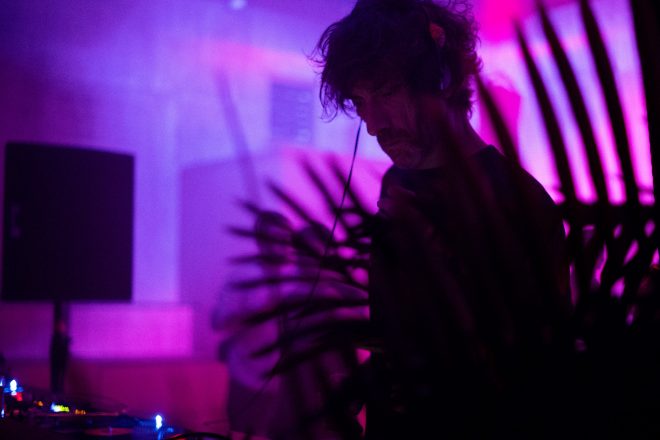
Foto: Matteo Manzini. © Gabriela Andreica
Si può dire quindi che il tuo percorso artistico si sia sempre mosso tra scene diverse e mai rimasto incasellato in un’unica “pista”. Questa è stata una scelta volontaria dettata dalle esperienze o più un modo personale di vivere il flusso e di approcciarti inconsciamente alla musica?
Mi piacerebbe dire di aver avuto un master plan e di sapere esattamente in quale direzione volevo e vorrò andare, ma in realtà è successo raramente così: la maggior parte delle scelte sono state inconsce, anche quelle più rilevanti, sempre però supportate dal feeling che da quella specifica parte ci fosse qualcosa che valeva la pena vedere, quantomeno una volta.
Guardando l’Italia da fuori, c’è qualcosa che credi stia evolvendo nel panorama elettronico e non solo? E cosa vedi che invece ristagna con le stesse dinamiche che ti hanno fatto scegliere di spostarti più di quindici anni fa?
In Italia ci sono tante ottime realtà, numerose crew grandi e piccole che si danno da fare e che hanno gusti musicali con cui riesco a relazionarmi: se ci sono proposte di booking da lì difficilmente le rifiuto, e non ricordo una volta nel quale l’organizzazione di un party in cui ero in line-up come DJ sia stata insufficiente. Sono sempre un big fan :))
Come già menzionato in una precedente risposta, l’eccesso di burocrazia nel settore dell’intrattenimento rimane però sicuramente un limite, e un’altra cosa che mi piacerebbe veder scomparire è il pvp tra club, o tra promoter (“se suoni da loro allora non potrai mai più suonare da me”, per fare un esempio pratico): collaborando penso si creino sinergie dove il risultato del lavoro di squadra (la "somma") supera la semplice aggregazione dei contributi individuali (gli "addendi"). La combinazione di talenti, idee e prospettive diverse produce un valore aggiunto unico.
Cosa significa, quindi, per te essere un “italiano fuori”?
Probabilmente mi sento ancora più responsabilizzato nel cercare di essere la versione migliore di me stesso, sia umanamente che professionalmente. Mi considero londinese, home is here, but I’m still flying the Italian flag too, e so che la percezione esterna del nostro paese di origine risulta anche dalla somma dei singoli comportamenti, e risultati, di noi “italiani fuori”
Foto: Matteo Manzini. © Gabriela Andreica
ENGLISH VERSION
A lot has changed since those solo trips between Emilia-Romagna and London. Matteo first tasted ’90s club culture and was instantly struck by it, still carrying that childlike sense of discovery into his sets today, the kind that sets a truly sensitive artist apart. Choosing London almost fifteen years ago felt like the natural evolution of his path, both as a DJ and as a devoted listener, shaping him into a selector who reads the energy in front of him and draws inspiration from the mysticism of “flow”.
The idea of a curator might be the one that best fits Matteo’s personality outside the booth. Over the years, alongside his project damaged, launched with Georgio Oniani, his presence has left a mark across several London platforms, eventually leading him to become part of the fabric family, where since 2023 he has curated the chill-out rooms for the club’s 24- and 36-hour events.
We sat down with him to talk about what it means today to be an Italian who chose different horizons in order to open up the possibility of making a life through music and club culture. He told us what makes the difference in a city like London, what it can teach you, and what can make you feel at home.
Beyond answering our questions, Matteo introduced himself in the way that probably represents him best: through music. An exclusive mix for Mixmag AE Group is now available on our SoundCloud channel, inviting you to look beyond the borders of a refined and surprising artistic personality. Headphones on, and enjoy the listen!
Let’s start from the basics: what pushed you to leave Italy, and how much was that decision influenced by music?
A decision influenced 110% by music and clubbing, supported back in 2009 by a group of London-based friends I had already been spending time with for years, and with whom I also used to travel to Ibiza and Berlin. To be honest, at a certain point they practically forced me to move, and I didn’t put up much resistance :)
How did you end up in London? And what made you stay?
London had always been there. Ever since my parents sent me to study English in the UK at summer camps after middle school, for two weeks every year. I’ll never stop thanking them for the open-mindedness of that choice, which was far from obvious in the late ’80s.
From there, the approach was gradual. At first London was a stop during Interrail trips in the ’90s, then from 2003 onwards, taking advantage of the first low-cost flights with easyJet and Ryanair. They allowed us to leave home on a Saturday morning, go to fabric or secretsundaze, and be back at the office on Monday or Tuesday without colleagues suspecting anything, spending roughly the same budget as a weekend in Riccione or Milan.
Actually, they allowed me to do that, since I mostly travelled alone. It still took energy, determination and a bit of madness. I could consider myself a (mini) explorer, and the feeling was fantastic.
Six years of periodic and incremental trips, until I simply forgot to buy the return flight to Bologna :)
London is one of those cities that can give a lot, but only, I think, to those who have proven they deserve it. Do you relate to this idea?
London gives everyone a chance, but at the same time it’s very difficult to handle. Each of us comes here with a dream and works intensely to achieve it. Some make it, some don’t, others reinvent themselves along the way and discover different potentials. I don’t know if there is always “merit” involved, but passive attitudes are rarely rewarded.
Here I understood that what matters is doing something, that making mistakes is allowed because it lets you receive feedback, which you can then use to build something that’s a little less wrong. External judgement effectively turns into free consultancy, to be filtered with common sense, and with the right mindset it becomes an opportunity for improvement rather than friction or even shame.
In what way has the London context influenced your relationship with music, even prior to developing your sound?
Any act, of any genre and size, passes through London. The offer is endless, and the artist of your dreams, the one you love now, and the one you don’t yet know you will love, will probably perform within the next six months in a venue, even a tiny one, no more than 30 minutes from your home.
Patti Smith playing a sold-out concert at St Paul’s Cathedral, and Nicolas Lutz doing an extended DJ set for 50 people at StarLane. I was there for both, and I thought, “this is insane, this is why we live in this city”.
I learned that the musical input that will influence me for a day, a month or a year is always within reach, and I’ll encounter it next weekend, or at most the one after.
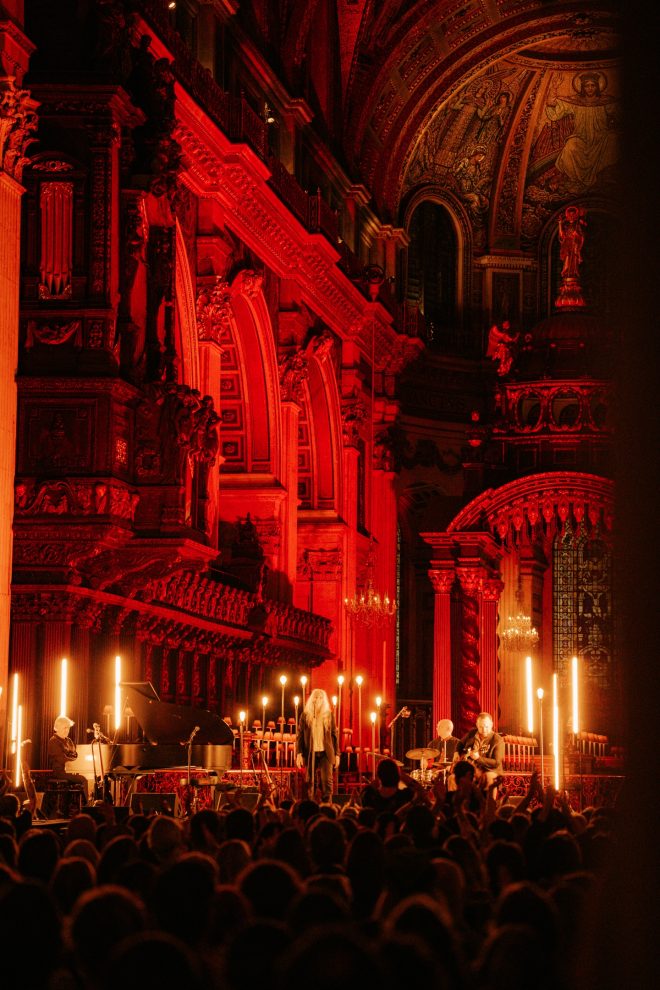
Photo: fabric x Saint Paul Cathedral - Patti Smith. © Benedict Priddy
London, between the late ’90s and early 2000s, was the true realm of free parties and raves. Did you connect with that world? If so, what did that movement and those experiences leave you with?
To be honest, what I know about free parties and raves I first learned in Bologna, which in the ’90s was at the forefront. First of all, the original Link on Via Fioravanti, with a musical programme I wasn’t yet able to fully understand, but which certainly helped shape everything we’re talking about in this interview. Teatro Polivalente Occupato and Livello 57 as well, always in Bologna. I don’t remember a specific DJ, or even a particular genre. Entry was free or at least affordable, we would go and our ears would absorb everything. They were an excellent starting point, and I’m grateful for them.
Sometimes we would stay at Link all night. Other times we’d get information about some rave and try to reach it, maybe after calling a landline from a phone booth, with no certainty about how many people would be there or whether it was still happening. Less convenient times compared to today’s hyper-connected world, but ones that probably instilled in me a tendency to experiment, to make the effort to seek out events even when you don’t have exact information, simply based on the feeling that it might be worth it.
What do you think London can offer artists that Italy still struggles to provide? And on the other hand, is there anything you miss there?
Among the advantages London offers, there’s certainly greater mental flexibility and a lower level of bureaucracy, which results in more events and therefore more opportunities for artists to perform.
On the other hand, Italian sensitivity and taste are always a must, even in musical terms: immediately recognisable and not easily matched :)
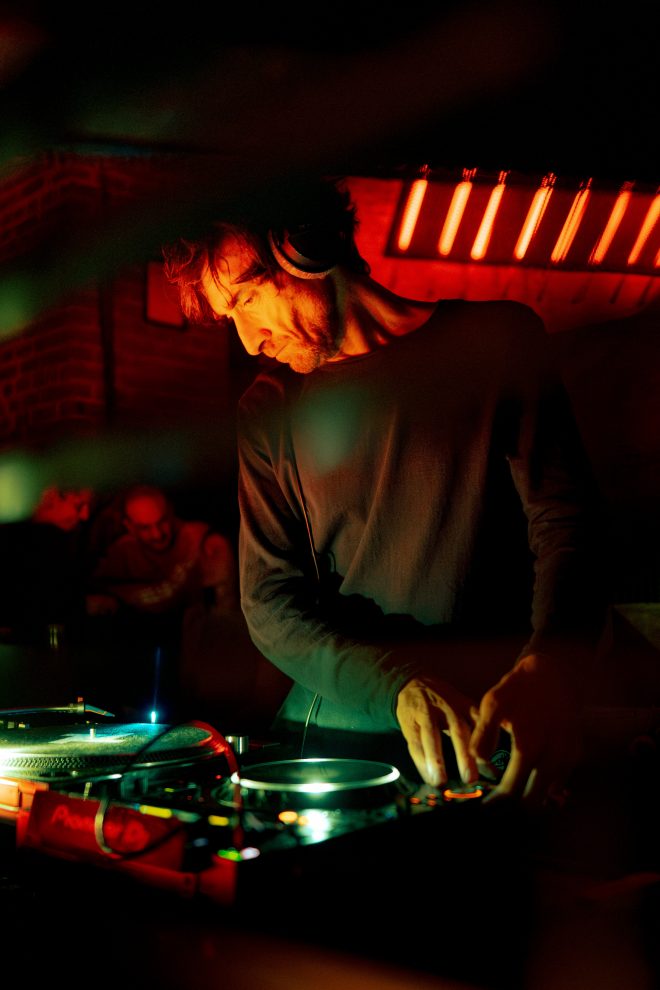
Photo: chill-out room, fabric. © Claudia Rojas
Coming back to London: for you, fabric is a real family. How did you become part of it?
By going to the club as a customer. When you’re having fun and allowed to be yourself, you end up attracting frequencies similar to your own, I truly believe that. My first memories of the Room 1 dancefloor marathons are unforgettable. I had claimed a usual spot and immediately felt at home.
I started organising my own party, damaged, together with Georgio Oniani, from the very first month after I moved. Then suddenly, I think it was around 2011, part of the fabric staff, particularly Judy Griffith, started attending it. You can imagine the surprise on our faces, especially the first time :) At that point we were deliberately keeping things small and under the radar, with a capacity of 80 to 100 people max, but she found us anyway.
Little by little, I was gradually entrusted with different tasks and roles: setting-up after-parties for fabric, then DJ sets for WYS!, bringing damaged into Room 3, and eventually my first Saturday DJ set in Room 1. Eight years from the day I moved to London, which felt like eight minutes to me.
And speaking of family, what do you think makes the difference in a club that goes beyond simply being a venue and becomes a real community?
Recognising that the dancefloor holds the same importance as the booth, 50/50, and that those who choose a club as their place to dance contribute to its success just as much as the DJs do, again 50/50.
“Thank you for being there and thank you for dancing”. I wish I could hear this sentence at every party.
As we mentioned, since 2023 your role within the fabric team has also included curating the club’s chill-out room, which clearly means working with a less obvious dimension of clubbing. How did this idea come about, and what kind of emotional responsibility do you feel in creating a space for decompression, listening and intimacy?
The COVID lockdown was definitely the turning point. An infinite, fluid stretch of time in which it was possible to explore many musical directions, and even spend an entire afternoon listening to just three sounds, micro-tuning them until finding the best possible balance. During those months, my main focus temporarily shifted towards ambient music, resulting in several productions and my first guest mixes of that kind.
When fabric asked me in 2023 to take care of their chill-out room during 24- or 36-hour events, a space that already existed but didn’t have a dedicated curator, I accepted without hesitation, as I honestly felt ready for it.
The responsibility is far from trivial. In hindsight, I hadn’t fully grasped it straight away, because it means being musically alongside clubbers during their most fragile moments, both mentally and physically. At the same time, I don’t want to propose a mainstream, instantly digestible form of ambient music, the kind with birds and waterfall sounds, often used, no offence meant, in spas or restaurants. So it’s a constant search, but always with balance and lightness.
From a technical point of view, I consider myself very lucky: Room 2 is perfect, with an impeccable sound system and lighting, and it’s also acoustically isolated from the rest of the club. Many parties are now trying to add a chill-out space, but these are often areas where low frequencies from the main room, especially the kick, bleed through, causing the whole concept of relaxation and detachment to collapse.
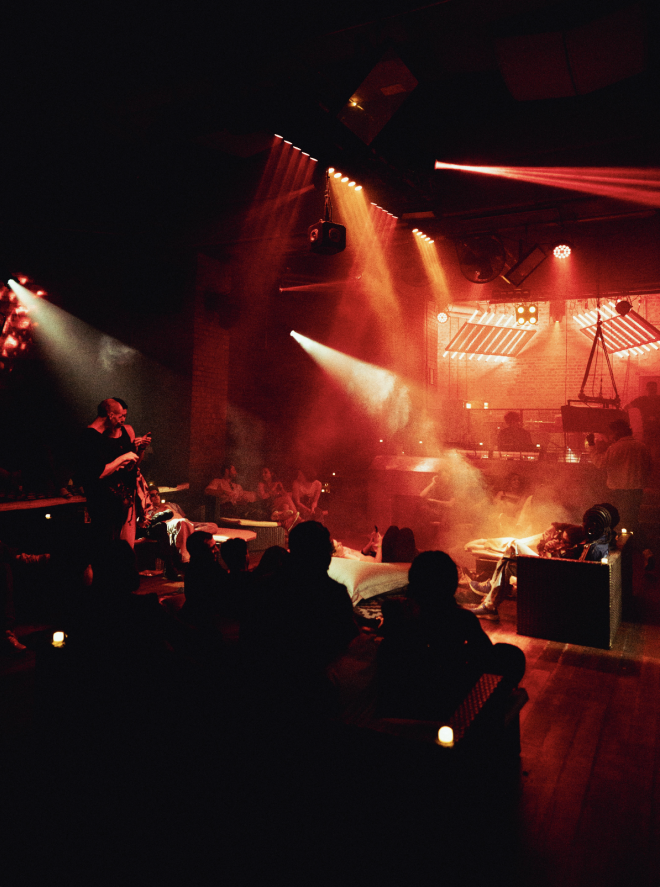
Photo: chill-out room, fabric. Paulina Fraczeck
Do you think the same kind of “chill-out room” concept could have developed in Italy, or is Italian club culture oriented towards different horizons?
Probably not, because there isn’t enough patience, but I’d be happy to be proven wrong.
Were there other places where you considered settling before finally establishing yourself in London? If so, what did they leave you with?
Milan in the early 2000s. Six years. Let’s say it was a good warm-up, and I still carry it in my heart :)
What still attracts you most about London today?
The quantity and quality of input, not only musical but also artistic, design-related and more. Then there’s the overall production level: many events can truly be described as outstanding.
Finally, perhaps more than anything else, the mix of cultures. Every time I return, maybe after a short break spent with my family in Italy, and I’m on the train from the airport into the city, I look around and think, “wow, within a single carriage you can find all the styles, races and behavioural habits of the planet coexisting”.
Your European roots, however, are spread across different places, not just London, but also Germany for example, more precisely Offenbach am Main, within the walls of Robert Johnson…
For years, that was the place of dreams. An incredible club in its simplicity: a rectangular room, the booth at dancefloor level, no physical barriers between the DJ and the dancers, windows along one side and a terrace. When daylight came in, there was a shift in energy and another party would begin, all without having to buy a second ticket :)
The original management, which I believe remained in place until 2019, didn’t promote the club through conventional means. Its online presence was deliberately low-profile, line-ups were announced with little notice, guestlists were an exception, and door favoritism was almost non-existent.
Coming back to the idea of frequencies, I used to go to Robert Johnson not only for the musical experience, but also because I knew I’d meet many people tuned to the same wavelength as me. I spoke with hundreds of people on that terrace and probably agreed on more bookings there than I ever did from my desk :)
Not wanting to miss out on anything, I also decided to live in Frankfurt for about ten days with the HardWorkSoftDrink crew. The full experience.
Photo: Matteo Manzini. © Gabriela Andreica
So, could it be said that your artistic path has always moved across different scenes, never confined to a single “lane”? Was this a conscious choice shaped by your experiences, or more a personal way of moving with the flow and approaching music instinctively?
I’d like to say that I had a master plan and always knew exactly which direction I wanted, and will want, to take, but in reality that’s rarely been the case. Most of the choices I made were instinctive, even the most significant ones, always supported by the feeling that in that specific direction there was something worth seeing, at least once.
Looking at Italy from the outside, is there something you feel is evolving within the electronic landscape and beyond? And what do you see instead as stagnant, repeating the same dynamics that led you to move away more than fifteen years ago?
In Italy there are many excellent realities, numerous crews both large and small that work hard and have musical tastes I can relate to. If booking proposals come from there, I rarely turn them down, and I can’t recall a single time when the organisation of a party I was booked to play was insufficient. I’m always a big fan :))
As mentioned earlier, the excess of bureaucracy in the entertainment sector remains a clear limitation. Another thing I’d really like to see disappearing is the pitting of clubs against one another, or promoters against promoters (“if you play for them, you’ll never play for me again”, to give a practical example). I believe collaboration creates synergies where the result of teamwork exceeds the simple sum of individual contributions. The combination of different talents, ideas and perspectives generates a unique added value.
So, what does it mean for you to be an “Italiano Fuori" (Italian Abroad, Ed.)?
I probably feel even more responsible for trying to be the best version of myself, both on a human and professional level. I consider myself London-based, home is here, but I’m still flying the Italian flag too. I’m aware that the external perception of our country of origin is also shaped by the sum of the individual behaviours and achievements of us “Italians abroad”.
Thank you for this interview and for your time and space, I’m truly grateful.
